
The Lie Industry
Lies aren’t symptoms of authoritarianism; they’re at its essence

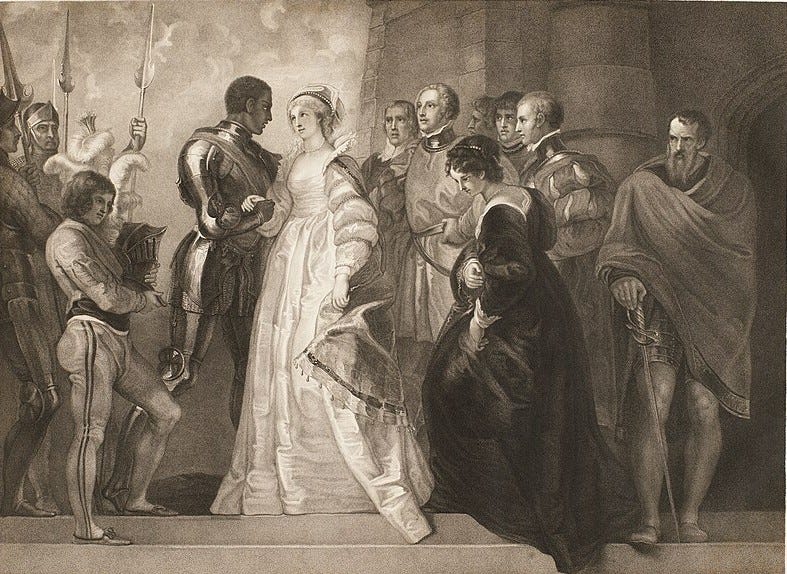
Social contracts can’t achieve stability without trust, nor can they endure. Trust has many origins: familial or tribal roots, shared languages or culture, common enemies, negotiated terms. They all demand transparency for trust to be realized. We can imagine a world that tends toward disclosure, if only to maximize social power and cohesion.
This isn’t the world we inhabit, in which distrust is pervasive and merited. Technologies (AI, internet scams, larcenous terms and conditions for seemingly innocuous apps) amp the phenomenon, but people create and distribute the technologies.
News organizations, long maligned unjustly by political opportunists as partisan mouthpieces, have today largely capitulated to the desires of political overlords. Citizens have lost trust in institutions created to maintain peace and security (the US Department of Defense, police forces, border control) by evidence of their aggression against those they have a duty to serve. As expected under these conditions, division and conflict abound. Such are the planned outcomes produced by the lie factories stoked by global autocracies.
Lying as a generator of authoritarian power
In 2024, the US voted to return to office a former president who’d lied an unprecedented number of times during his first term. Fact checkers at the Washington Post documented more than 30,000 false or misleading statements Donald J. Trump made during his first term, an average of 21 lies per day. Predominant amongst these falsehoods was the Big Lie: that the election he lost to Joseph R. Biden in 2020 was ‘stolen,’ despite overwhelming evidence to the contrary.
The Big Lie concept dates back to Adolf Hitler’s foundational memoir, Mein Kampf, in which he accused Jews of using a Big Lie to assign blame for Germany’s loss in World War I. He and his propaganda minister, Joseph Goebbels, then deployed their own Big Lie—that Jews were trying to exterminate Germans—to justify the Holocaust.
The Big Lie relies on an assumption that people won’t find it credible to think that someone would make from whole cloth a claim that’s singularly outrageous. Its effectiveness depends, if you will, on something of a reverse gullibility. Repeat it often enough to normalize it, and the lie can be sold as truth.
In Alexei Navalny’s posthumously published memoir, Patriot,1 he addresses the role and costs of lying as an engine of political domination. Navalny devoted his life to investigating governmental corruption and informing the Russian people. Robbing the public blind while retaining their acquiescence required the state to disseminate lies with abandon.
In December 2014, Navalny delivered a statement in court, as requested by the trial judge who would decide his and his brother’s sentences.2 In his statement, Navalny addressed the judge and two prosecutors, calling to their attention a tell of theirs: “Do you realize that you are all constantly looking down at the table? You have nothing to say.” (p. 236)
“I stand here before you and am prepared to stand here for as long as it takes to show you all that I don’t want to put up with this lying—and I won’t put up with it. The whole thing is literally lies from start to finish, do you understand? [….]
Everything is built on lies, on constant lying, do you understand? And the more concrete proof of something that we present to you, the bigger the lies that we come up against. These lies have become the whole modus operandi of the state; they’re now its very essence. We watch our leaders give speeches, and we hear lies from start to finish be it on important matters or trivial ones. Yesterday Putin said “We don’t own any palaces.” Yet we’re taking photos of three palaces every month! [….]
Why do you put up with these lies? Why do you just stare at the table? [….] The only moments in our lives that count for anything are those when we do the right thing, when we don’t have to look down at the table but can raise our heads and look each other in the eye. Nothing else matters.”
Patriot, pp. 238-239
Anne Applebaum’s book, Autocracy Inc.,3 analyzes global autocracies to construct a vivid description of how they work.
Authoritarianism, the book argues, relies on constant and repetitive lying to destroy the concept of objective truth, effectively wearing down the oppressed to instill apathy and disengagement. This is the effect Navalny reflected back to the judge and prosecutors, looking down at the table while staying silent in the face of obvious state-generated lies. “Things become even more dangerous when people are sick of the political conversation and just want it to end, and they want someone to come along and end it.”
“[M]any of the propagandists of Autocracy, Inc. have learned from the mistakes of the twentieth century. They don’t offer their fellow citizens a vision of utopia, and they don’t inspire them to build a better world. Instead, they teach people to be cynical and passive, because there is no better world to build. Their goal is to persuade people to mind their own business, stay out of politics, and never hope for a democratic alternative: Our state may be corrupt, but everyone else is corrupt too. You may not like our leader, but the others are worse. You may not like our society, but at least we are strong and the democratic world is weak, degenerate, divided, dying.”
Autocracy, Inc., p. 74
Autocracies use lies for myriad purposes. Lies become loyalty tests to reward the obsequious and punish critics. Lies obfuscate the distinction between truth and disinformation in order to discredit verifiability. Lodging absurd charges renders them impossible to refute because of their ridiculousness. Taking facts off the table turns discussion into arguments about identity. These tactics share a single goal: to undermine democracy and the rule of law by instilling fear and apathy.
Propaganda isn’t just a tactic: it’s essential to autocracy
Authoritarianism distinguishes itself by its corruption. Its goal is to extract maximum profit from the masses for the benefit of the few. On a grand scale, this cannot be performed in stealth, since no one willingly participates in his own robbery. Hence, lies become essential. The victim must be distracted from the hand in his pocket and must be given a scapegoat to blame when he finds his pockets empty.
“If you can convince the lowest white man he’s better than the best colored man, he won’t notice you’re picking his pocket. Hell, give him somebody to look down on, and he’ll empty his pockets for you.”
Lyndon B. Johnson
The false reality produced by the authoritarian’s lie factory manufactures a network of adherents who trust only in each other and those selling them lies. These true believers form a tribe. In their unity and in their opposition to skeptics who trust in verifiable evidence, they become fiercely defensive. Their loyalty to the false narrative is essential to establishing the authoritarian’s base.
Without this base, the authoritarian lacks the number of people required to execute its aims. Authoritarians and their oligarch enablers are few, while many are needed for the work of subduing and terrorizing the populace, whether informing on neighbors targeted by the regime, instilling fear in neighborhoods, running concentration camps, or prosecuting those targeted for retribution or as scapegoats.
The Shakespearean play about lying
In Othello, Shakespeare imagined a world set on an axis between the poles of honesty and lies. The play is also a tragedy, foretelling which pole’s magnetism is more destructive.
Consumed as the play is with racial or ethnic animosity,4 the play is commonly seen through a lens of racism. Shakespeare never held himself to a single theme when he could engage in many, which has proven a boon to Shakespearean essayists5 and directors through centuries. He constructed multiple subplots and themes into an architectural whole, each reinforcing the other. For instance, Romeo and Juliet can be about the tragic costs of generational feuds and also about the impetuosity of young love that needs guidance from older and wiser generations to survive. Both are valid, and they reinforce each other.
The black/white dynamic in Othello mirrors the polarity between honesty and dishonesty. These binary attributes aren’t assigned literally: that is, the Moor’s fatal flaw is his absolutism in honesty, not in having dark skin. The play doesn’t present a simple opposition of black (evil) and white (good), even though the overt racism of some characters is used to highlight their flaws. What is important is the dynamic of the stark opposition between black and white.
Iago, the play’s villain, from the first scene announces his intent—self-enrichment—and his tactic to achieve it by lying. He’s stunningly effective. Dissembling enables him to distract and cast doubt, to manipulate others, to insinuate crimes without evidence, to have people betray even their most closely held principles. He wields stochastic terror. His Big Lie is Desdemona’s infidelity to Othello, so monstrous an idea that it couldn’t be made up.
Othello is not only a Moor but also a storied warrior. His virtue is bound to the steadfast and unambiguous principles required by the military. He questions neither mission nor motive. He doesn’t hesitate to act when given facts from a trusted source.6 Although highly effective in battle, these virtues prove to be fatal flaws when pitted against the sinuous, chameleon attacks from an unprincipled opponent who recognizes no laws nor authority but his own.
By the end of the play, the stage is littered with the bodies of good people: Desdemona, Othello, and Emilia, Iago’s blameless but loyal wife. Iago’s faithful friend Roderigo, whose pockets Iago had picked, lies dead offstage. Once captured, Iago is silenced. He has orchestrated every death. Lies were his weapons of choice.
Before dying, Othello says:
When you shall these unlucky deeds relate,
Speak of me as I am. Nothing extenuate,
Nor set down aught in malice. Then must you speak
Of one that loved not wisely, but too well, […]
Act V, Scene 2, 350-353
The play ends in justice restored, with the state’s law reasserting itself. Lodovico judges Iago guilty, directs the disposition of Othello’s assets, charges the Lord Governor to punish Iago, and promises to inform the state fully of the facts. “The time, the place, the torture—O, enforce it!”
The play depicts, vividly and evocatively, the tragic costs of allowing the dark force of dishonesty to insinuate itself into positions of power. A perpetrator isn’t brought down with low stakes. If Iago’s only offense was to rob Roderigo of his purse, he would be little different from the many Shakespearean cadgers who roam the plays. But his ambitious gambit felled a prized general, upon whom the security of the state depended. He threatened the very stability of the state.
Notably, the play resolves this crisis by reasserting the rule of law.
We are the market targeted by the lie industry
US voters returned to office a former president with a precedent-breaking history of lying. Those voters were unmoved by fact-checked evidence, much less by his criminal indictments and adjudicated guilt in civil trials. Despite copious documentation, his dishonesty doesn’t seem to drive any of his rapidly declining poll numbers. You might wonder if lying even matters in the minds of the US electorate.
Calling out dishonesty as it occurs is important, since it refuses to cede legitimacy to propaganda. Equally important is to place the multitude of instances within a comprehensive context. A constant stream of lies told without consequence achieves at least several things. It implants doubt as to whether the lie is truly false, and it casts a shadow over those who oppose it. In the minds of people accepting propaganda passively, “This politician is lying” becomes “All politicians lie.” It erases all legitimacy, excusing the propagandist while vilifying his opponent. Polls substantiate this conclusion, giving low approvals to both the president and the Democratic party that opposes him.
Understanding the purpose behind the lies discloses the actual threat, which isn’t merely the compulsive psychology of a dishonest man. Iago was not simply a criminal; he attempted to undermine the state for his own enrichment. Lying isn’t a character flaw for autocrats; it’s their weapon of choice.
The target market for the lie industry envelops all of us. Its aim is to eliminate democracy. We cannot look down at the table. We must not accept the normalization of assaults on principles once held dear. We have to insist on integrity, honesty, and accountability, and not relent because the work is hard and often dangerous. The times call for courage if we are to bring to a halt the factories of the lie industry.

Ellie’s Corner

Palate cleanser. I’ll just leave this sweet and honest face here, as the last word.
Thanks for reading,

Navalny, Alexei, Patriot, Alfred A. Knopf, NY, 2024.
The brothers were falsely accused of stealing 26M rubles from the French cosmetics company, Yves Rocher, characterizing a normal business practice as fraud. Accusing others of one’s own crimes is standard in the authoritarian playbook. Alexei was given a suspended sentence; his brother Oleg was forced to serve the sentence.
Applebaum, Anne, Autocracy Inc., Signal (Penguin Random House Canada), 2024.
The Elizabethans didn’t view the Moors as Americans view African Americans. American racism flattens the idea of race to a range of skin tones—hence the ‘paper bag test.’ The titular Moor in the play is described in typically racist terms that resonate today (skin color, thick lips, overly sexualized, simple minded, satanic), but he’s also perceived as a fierce warrior who’s highly effective, loyal, trustworthy, honorable. This distinction is important to understanding his shifting characterizations through the play.
I count myself amongst them. My first year on Substack I published a series of essays comprising every Shakespearean play.
Othello is sent to Cyprus, the location of most of the play, to fight the Turks who have ships on the sea. The Turks’ destination is ambiguous, and a group of senators work through this ambiguity in deciding what steps to take. Only once they interpret the likely destination do they give Othello his orders, which Othello leaps to execute despite it being his wedding night.
The Lie Industry thrives because so many people like the lies. Its like throwing chunks of raw meat to starving lions.
The frightening part of this is what you started with. Trust. I trust the cops in my town. But if I were visiting family in Florida, I would be terrified if I saw blue lights in my rear view mirror.
It will be a very long time before trust in American institutions is restored - if ever. It will take decades of lawful and reasonable and honest stewardship.
Maybe our grandkids will know what trust is...
I feel like the ground has been replaced with quicksand, yet most news outlets are acting like business as usual. Your analysis is a breath of fresh air! I hope we find our way back to law & order.